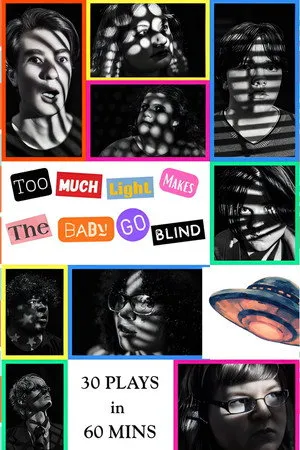
Too Much Light Makes the Baby Go Blind (2026)
Director: Ella Eggold
Cast: Cecilia Mankin, Pearl Blauvelt, Ellie Berrum, Zoe Abbott, Dale Coleman
More About This Film
Too Much Light Makes the Baby Go Blind is a landmark improvisational musical comedy that premiered in Chicago in 1975. Created by members of the Second City Training Center, the show consists of 45-minute productions of 30 plays based on Grimm's Fairy Tales, performed entirely without rehearsals or scripts. The premise relies on actors using a single prop to signal scene changes while continuing to improvise dialogue and action. Despite its chaotic nature, the show has become a cult classic, celebrated for its high energy, wit, and the unique challenge it poses to its performers who must maintain coherence under extreme pressure.
The production has toured extensively across North America and internationally, adapting to various venues from black box theaters to large concert halls. It remains one of the longest-running improvised shows in history, with thousands of unique performances created since its inception. The cast typically includes professional improvisers trained in techniques developed by Second City and iO Theater, ensuring a consistent level of quality despite the lack of pre-planned material. Audiences are treated to a fast-paced narrative that blends humor, romance, and absurdity, often breaking the fourth wall to engage directly with viewers.
Over the decades, Too Much Light Makes the Baby Go Blind has influenced countless other improvisational groups and comedians. Its format requires not only quick thinking but also strong collaboration among ensemble members, as any mistake can derail the entire story. The show’s enduring popularity lies in its unpredictability; no two performances are ever alike, making each showing a unique theatrical event. Fans often return multiple times to experience different interpretations of the same fairy tales, appreciating the skill and spontaneity required to pull off such a complex performance.
- The show was originally conceived by Chris Bailey, Scott Brown, and Kurt Voss at the Second City Training Center in Chicago.
- Performances are strictly limited to 45 minutes, requiring precise timing and rapid scene transitions.
- A single red lightbulb serves as the primary cue for actors to change scenes and props during the show.
- The script is non-existent; all dialogue, songs, and actions are created on the spot by the cast.
- The show has been performed in over 20 countries and has inspired numerous imitators worldwide.
Where to Watch
As an improvisational stage play rather than a traditional film, 'Too Much Light Makes the Baby Go Blind' is not available on standard streaming platforms or for digital purchase. Instead, audiences can attend live performances or view archival recordings through specific channels.
- Improv Olympiad – theatrical tickets for live performances in Chicago.Second City – theatrical tickets for special revivals and related events.Vimeo On Demand – rental of archived highlight reels and select full performances.YouTube – free access to promotional clips and audience testimonials.Amazon Prime Video – purchase of documentary features about the show's history.